


10 Signs You Might Have Hypermobile Ehlers Danlos Syndrome
Hypermobile Ehlers-Danlos Syndrome (hEDS) is the most common form of EDS, but it’s also the most underdiagnosed. Because symptoms vary widely and often seem unrelated, many people struggle for years without a clear answer.
If you’ve been dealing with ongoing pain, fatigue, digestive issues, or puzzling reactions your doctor can’t explain—this guide might help you connect the dots.
- Joint hypermobility (“double-jointed” flexibility)
Can you bend your fingers back unusually far? Do your elbows or knees hyperextend? Many people with hEDS are extremely flexible—especially in childhood—but experience joint pain or instability as they get older. - Chronic joint pain or frequent subluxations/dislocations
Do your joints pop out easily or hurt after minimal activity? hEDS weakens the connective tissue that stabilizes joints, which can lead to chronic injuries, pain, or needing to ‘click things back in.’ - Easy bruising or fragile skin
You might bruise like a peach or scar more easily than others. Skin may feel velvety-soft or stretch more than expected. - Chronic fatigue or poor recovery from activity
If you feel wiped out after walking around the shops—or need a nap after basic chores—it could be due to energy dysregulation linked to autonomic dysfunction. - Dizziness, light-headedness, or racing heart when standing
These are classic signs of POTS, which often co-occurs with hEDS. You may have been told it’s anxiety—but it’s not all in your head. - Digestive issues (IBS, reflux, bloating, nausea)
hEDS often affects the gut too—especially the smooth muscle function and vagus nerve. Symptoms can mimic IBS or food intolerances. - Allergic-like symptoms with no clear cause
Histamine sensitivity, flushing, rashes, or reactions to foods or smells could point to MCAS, another common hEDS overlap. - Brain fog, memory lapses or poor concentration
Many people with hEDS report cognitive issues that worsen with fatigue, heat, or illness. It’s not just forgetfulness—it’s physiological. - Hormonal or menstrual irregularities
Hormone shifts (like during periods, pregnancy, or menopause) often intensify hEDS symptoms. Many people first notice changes during puberty. - A long medical history with no unified explanation
If you’ve seen countless specialists and been told ‘everything is normal,’ but you know something’s not right—this might be your missing link.
If several of these signs sound familiar, it’s worth exploring further.
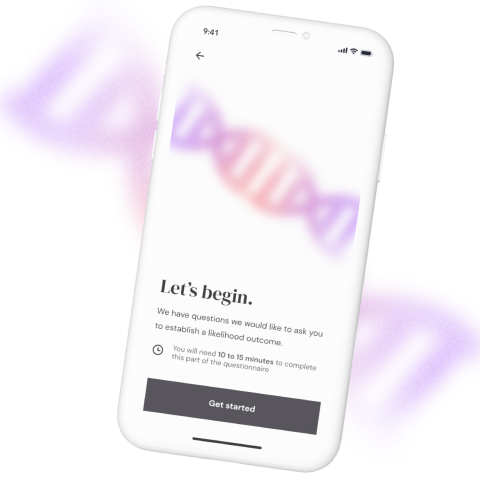
The ConnectED Health App is designed to help people living with complex, underdiagnosed conditions like hEDS. It helps you track symptoms, find patterns, and create a structured report to share with your healthcare provider.
Download the ConnectED Health Assessment App today, and track your symptoms to share with your healthcare provider.
Medical Disclaimer
This content is for informational purposes only and is not a substitute for professional medical
advice, diagnosis, or treatment. Always seek the advice of your doctor or qualified health
provider regarding any medical condition.
FAQs
What is Hypermobile Ehlers Danlos Syndrome (hEDS)?
A common subtype of EDS, hEDS is a connective tissue disorder marked by joint hypermobility, chronic pain, and often systemic symptoms. Diagnosis is clinical since no genetic test currently exists.
How is hEDS diagnosed?
Diagnosis is based on the 2017 international criteria: generalised joint hypermobility
(Beighton score), multisystem features, chronic musculoskeletal pain, and exclusion of
other disorders.
What are common symptoms of hEDS?
Symptoms include joint pain, instability, fatigue, digestive issues, dizziness (POTS), skin
fragility, brain fog, allergic-like reactions, and autonomic dysfunction.
Is there a genetic test for hEDS?
No—hEDS has no known genetic marker. Diagnosis is clinical and relies on symptom-based
criteria and exclusion of other connective tissue disorders.
What treatment options are available for hEDS?
Management focuses on symptom relief and function: physical therapy, strengthening,
gentle exercise, bracing, pain relief strategies, and lifestyle adjustments.
About the Author
Tracy Finnegan, RN, BAppSc is the Founder and Managing Director of ConnectED. A former ICU nurse and scientist, Tracy has lived experience with hEDS, POTS, MCAS, and Long COVID. After decades of misdiagnoses, she created the ConnectED Health App to empower patients to track symptoms, identify patterns, and advocate for accurate diagnoses and better care. Tracy brings firsthand experience, clinical expertise, and a patient-focused tool to support others